
Finding a CNC Sharpener for Friction Saw Blades up to 1,000 mm in Diameter
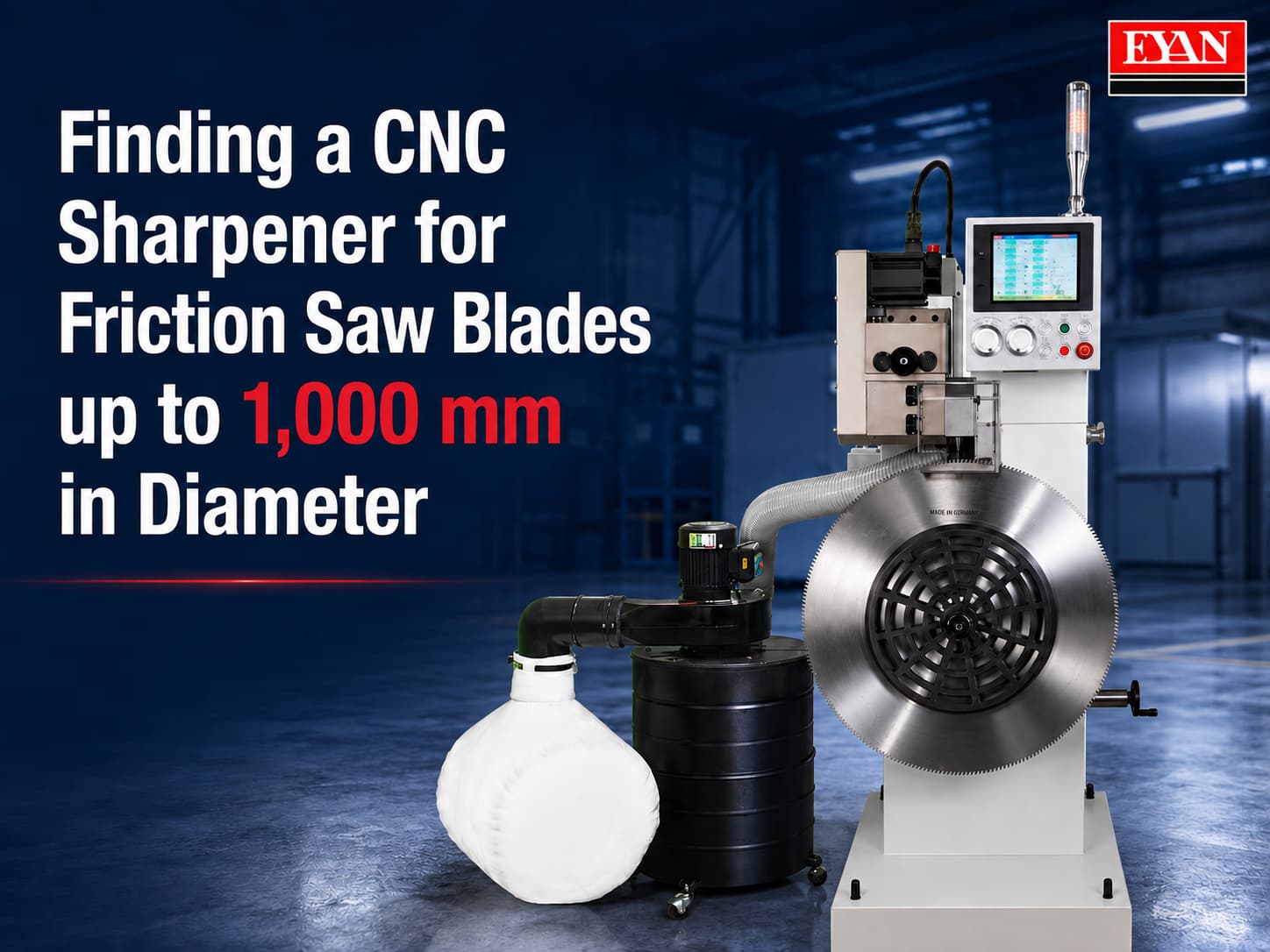
If your factory uses friction saw blades up to 1,000 mm in diameter, the EYAN ASC-1000 CNC Friction Saw Blade Sharpener is a machine to consider. Its specified grinding range covers 400 to 1,000 mm, making it a relevant option for businesses sharpening large friction saw blades. You can review the range in the ASC-1000 product specifications.
Finding a machine with enough diameter capacity is the first step. The next is making sure it fits the blades you use and the way your factory works.
For a steel tube manufacturer, that may mean getting blades ready for the next production run. For a sharpening service provider, it may mean handling different blade specifications throughout the week. In both cases, the right choice starts with a clear picture of your everyday sharpening needs.
A 1,000 mm Capacity Is a Starting Point
When searching for a large friction saw blade sharpener, maximum diameter is usually the first specification buyers check. It quickly tells you whether a machine belongs on your shortlist.
But it is also worth looking at the smaller blades in your workshop. If you use several sizes, the goal is to find a machine that covers as much of your regular workload as possible.
For example, 800 mm and 1,000 mm friction saw blades are both within the ASC-1000’s published diameter range. Blades below 400 mm fall outside that range and would need a separate equipment discussion.
Start with the full range of blades you actually sharpen, rather than only the largest one. This gives you a clearer view of how the machine could fit into your existing operation.
Will It Work with Your Existing Blades?
Two friction saw blades can have the same outside diameter and still require different grinding setups. Thickness, center bore, tooth geometry, and blade material all belong in the compatibility discussion.
You do not need a complicated technical report to begin. A blade drawing, a few clear photographs, and a short specification list can provide a useful starting point.
| Blade detail | What to share with EYAN |
|---|---|
| Outside diameter | Your smallest, largest, and most frequently used sizes |
| Thickness and center bore | Dimensions from the blade drawing |
| Tooth geometry | Tooth count, profile, and required angles |
| Blade material | The material specification, if available |
| Blade condition | Photos showing typical wear and the work required |
The drawing explains what the blade should look like. The photographs show its condition when it reaches the sharpening station. Together, they make it easier to discuss the required setup.
If your factory uses several blade types, begin with the ones that make up most of your workload. This keeps the evaluation focused on the work the machine will perform most often.
How Does the ASC-1000 Support Different Grinding Settings?
The ASC-1000 uses a graphical touchscreen interface for entering grinding parameters. These include blade diameter, tooth count, tooth height, cutting angle, back clearance angle, feed speed, and grinding wheel rotation speed. EYAN lists F, ECO, and A tooth types for the machine. View the ASC-1000 features.
For buyers, the practical question is how these settings relate to the blades on their production floor.
If you regularly move between different blade sizes or tooth profiles, ask to see how the setup changes. A demonstration using one of your common blades will be more informative than a general machine presentation.
You can then follow the process from mounting the blade to entering parameters and checking the finished result. This helps your team understand both the machine’s capabilities and the work involved in operating it.
The most useful demonstration is one that reflects your normal sharpening job.
Where Does It Fit in a Steel Tube or Steel Processing Operation?
For steel tube factories and steel processing businesses that use friction saw blades, sharpening is part of keeping tools available for production. You can also explore EYAN’s iron and steel industry solutions for related grinding applications.
A factory may be evaluating an in-house sharpener because outsourced turnaround is difficult to coordinate. Another may already sharpen blades internally but need equipment for a larger blade size. A sharpening service provider may be looking at the same machine to accommodate a particular group of customer blades.
These are different reasons to buy, even when the required blade diameter is the same.
Before comparing machines, identify the main job you want the new equipment to handle:
- Keeping frequently used friction saw blades available for production.
- Bringing a defined portion of outsourced sharpening into the factory.
- Accommodating larger blades within your workload.
- Handling a recurring group of customer blade specifications.
A clear objective makes the discussion more productive. It helps you decide which blade samples to evaluate, what turnaround time matters, and which accessories to include in the quotation.
How Long Will It Take to Sharpen a Blade?
A grinding-speed figure provides useful information, but it does not tell the whole story.
The ASC-1000 has a published grinding speed of 1–60 teeth per minute. Actual job time also needs to account for setup, the required grinding operation, unloading, and inspection. The published figure should therefore be used as a reference rather than a promise of completed blades per shift. See the official specification table.
The easiest way to build a realistic estimate is to use a representative blade and review the complete job.
How long does mounting take? What parameters need to be entered? How much grinding is required? What inspection does your team perform before returning the blade to service?
For a factory that repeats the same blade specification, evaluate that regular job first. For a service provider handling mixed orders, look at several common blade types.
A realistic cycle-time estimate should reflect your blades and your workflow. That gives you a stronger basis for planning than comparing maximum speeds alone.
What Should Be Included in the Machine Setup?
Once blade compatibility is clear, the next step is to review what your workshop needs around the machine.
Clamps, bushings, grinding wheels, dust collection, and installation space all belong in this discussion. Confirming them together helps you understand the proposed setup before the equipment arrives.
For example, EYAN lists the ASC-1000’s two-stage dust collector as optional, so the quotation should make clear whether it is included. Review the equipment options.
It is also useful to picture a normal working day: where incoming blades will wait, how operators will load them, and where finished blades will be inspected. Ask for an installation drawing so your team can plan working space and maintenance access.
These details make the equipment easier to evaluate as part of your workshop, rather than as a machine specification on its own.
Find Out Whether the ASC-1000 Fits Your Blades
The EYAN ASC-1000 answers a clear equipment requirement: CNC grinding for friction saw blades from 400 to 1,000 mm in diameter. Choosing the right setup means matching that capacity to your blade specifications and daily sharpening needs.
At EYAN, we welcome inquiries with blade drawings, photographs, and expected sharpening volumes. Whether you operate a steel tube factory, a steel processing plant, or a sharpening service, those details provide a useful starting point for discussing your application.
Explore the ASC-1000 CNC Friction Saw Blade Sharpener and send us your blade specifications to discuss compatibility and request a quotation.